15.7.22

Gillespie Field (KSEE) for MSFS


Gillespie Field (ICAO:KSEE) is a county-owned public towered airport, 12 miles northeast downtown San Diego and the beach in California. The airport is mostly used for general aviation, with 3 runways. Gillespie is the home of San Diego Air & Space Museum Annex, the ASTREA (the air support unit of the San Diego County Sheriff's Department) and a dozen of other businesses and flight clubs/schools like my club Plus One Flyers.

Free to download : https://flightsim.to/file/36679/gillespie-field-ksee


As for all of my MSFS mod, this small scenery is made from a pilot-eyes perspective. In real, I'm a Plus One Flyers member and mostly fly from Montgomery Field but Gillespie is one of the fourth base. I'm real PPL but a rookie amateur scenery developer: this mod is made with 99% of MSFS default objects library and feature massive number of details. It is inspired by some of my personal videos and pictures but mostly by high resolution aerial views from Bing and Google maps. It's a mix between the satellite imagery display from MSFS and more accurate data found on Internet. More than 600 objects have been added to the default scenery to make in more live and bring a touch of active area.

Features
- Taxiway lines: complete redesign, position and correct type like "center line enhanced"
  • Taxiway signs: complete redesign, correct name according to last charts, add some of the two sided taxiway sign (example at D5)
  • Windsocks: correct placement and addition
  • Ground markings: big TAXI yellow ground markings to avoid confusion with runways 27R and 27L and handcrafted (amateur) red intersection runway
  • Night blue light poles: remove the maximum of undesired extra pole
  • Buildings: all airport hangars/FBO's and buildings have been replaced by MSFS objects library.
  • Fences: 90% of external fences and gates.
  • Others: Reveal of Compass Rose west of the field on D1

Work-In-Progress
  • More accurate enhanced taxiway ground marking (background darkest tone)
  • Some missing taxiway signs (see "Request / I need you" below")
  • Size of taxiway signs (currently "size 3") maybe too big. Your feedback are welcome.
  • Some few segments of fences to close the field
  • Parking spots should be verified

Requests
I need you : there're several specific signs on taxiways that I found like "ATC NON VISUAL AREA", "Be a Good Neighbor". These make the scenery unique and look for other I was unable to identify. If you have pictures, feel free to share with me! The tower is the autogenerated MSFS one. If you want to build a (light) blender object... you are welcome!

Not included: attention to night environment.

Very local taxiway signs (if you know others at KSEE, let me know!)

The compass rose at D1

Gillespie cafe, not exactly as the real one, but it looks like


Another very local sign

Circle Air and its fuel self serve

View from the tower apron

A lot of taxiway signs corrected and re-place

Apron of ASTREA, the air support unit of the San Diego County Sheriff's Department

SAA Flight Training and Maintenance

Gillespie is not my first amateur scenery. If you love California as I do, enjoy my other freeware scenery for San Diego Montgomery Field (KMYF) and Ramona (KRNM) but also Oceano (L52) up on the Pacific coast. Please also consider my french airports Le Touquet (LFAT), Toussus-Le-Noble (LFPN) and Cosne-sur-Loire (LFGH).


16.5.22

Test de ma nouvelle radio portable en vol : il vaut mieux être haut et proche pour se faire entendre ;)


Vous avez une radio portable ? Et vous imaginez l'utiliser en vol en cas de panne de la radio de bord ? Hum. Il vaut mieux être très près de la station de réception pour espérer qu'elle vous entende. Et très haut ;)

Depuis très longtemps, j'ai toujours une radio portable aéro. dans mes affaires de vol. Pour l'instant, depuis une dizaine d'année, je l'ai utilisé pour écouter les fréquences depuis le sol (ATIS, sol, Tour) et parfois en émission pour demander des clairances comme un roulage au pompe avant de mettre en route ou bien dans le contexte particulier des départs VFR à Las Vegas (McCarran/Read).

Mais je me suis toujours dit que cette radio portable pouvait aussi me servir en vol en cas de panne de la radio de bord. Elle est toujours équipée de l'adaptateur pour y brancher mon casque aéro (micro+écoute).

Heureusement, je n'ai jamais été confronté à cette situation.

Dernièrement ma vieille iCom qui m'accompagnait depuis une dizaine d'année à rendu l'âme.  Je l'ai remplacé par une Yaesu FTA-550 et lors d'un vol en région parisienne, je l'ai testé en route entre Etampes et St-Cyr, en transitant avec Chevreuse Info. Le test a été réalisée dans un contexte "région parisienne" : entre 2000 et 1500 pieds, la radio à la main et l'antenne de réception à une petite dizaine de nautiques. Résultat : le contrôleur ne m'entends pas du tout mais j'arrive à l'entendre sans problème. On notera aussi le maniement hésitant. Dans une situation de stress, ce serait une tout autre histoire ;)

Evidement, on sait bien que la radio portable est de faible puissance (5w en crète selon les données constructeur) et ne dispose que d'une petite antenne. Alors que des radios récentes de bord annoncent de 10  à 16 w en émission et profite de l'installation à demeure. Elles ne boxent pas dans la même catégorie.

Conclusion : je suis sûr maintenant (je m'en doutais bien sûr :) ) qu'il ne faut pas escompter  être entendu, à basse altitude, sans être vraiment très proche (verticale?) de la station.

Un pilote averti en vaut... au moins deux ;)

6.5.22

L'arrivée et l'atterrissage à Catalina

Je n'ai pas eu l'occasion de faire le Farwest'22 initialement "prévu", mais j'ai tout de même pu aller faire un p'tit saut à Catalina, juste en face de Los Angeles au départ de San Diego. On y mange des buggers aux bisons. Par sûr du tout que ce soit de la viande des bisons implantés artificiellement sur l'île. M'enfin, l'arrivée et l'atterrissage sur cette piste posée en haut de la colline reste toujours exceptionnelle.


1.5.22

Comment activer l'outil de visualisation du SU9 dans MSFS (CFD, Air Flow, Particule Flow)


Depuis la version 1.25.7 (Sim Update 9) Microsoft propose quelques outils de visualisations de flux d'air et des particules autour de la cellule de avion. On en parle assez peu et pourtant les quelques étapes sont simples à réaliser:

  1. Charger un vol avec par exemple le Cessna 172 G1000
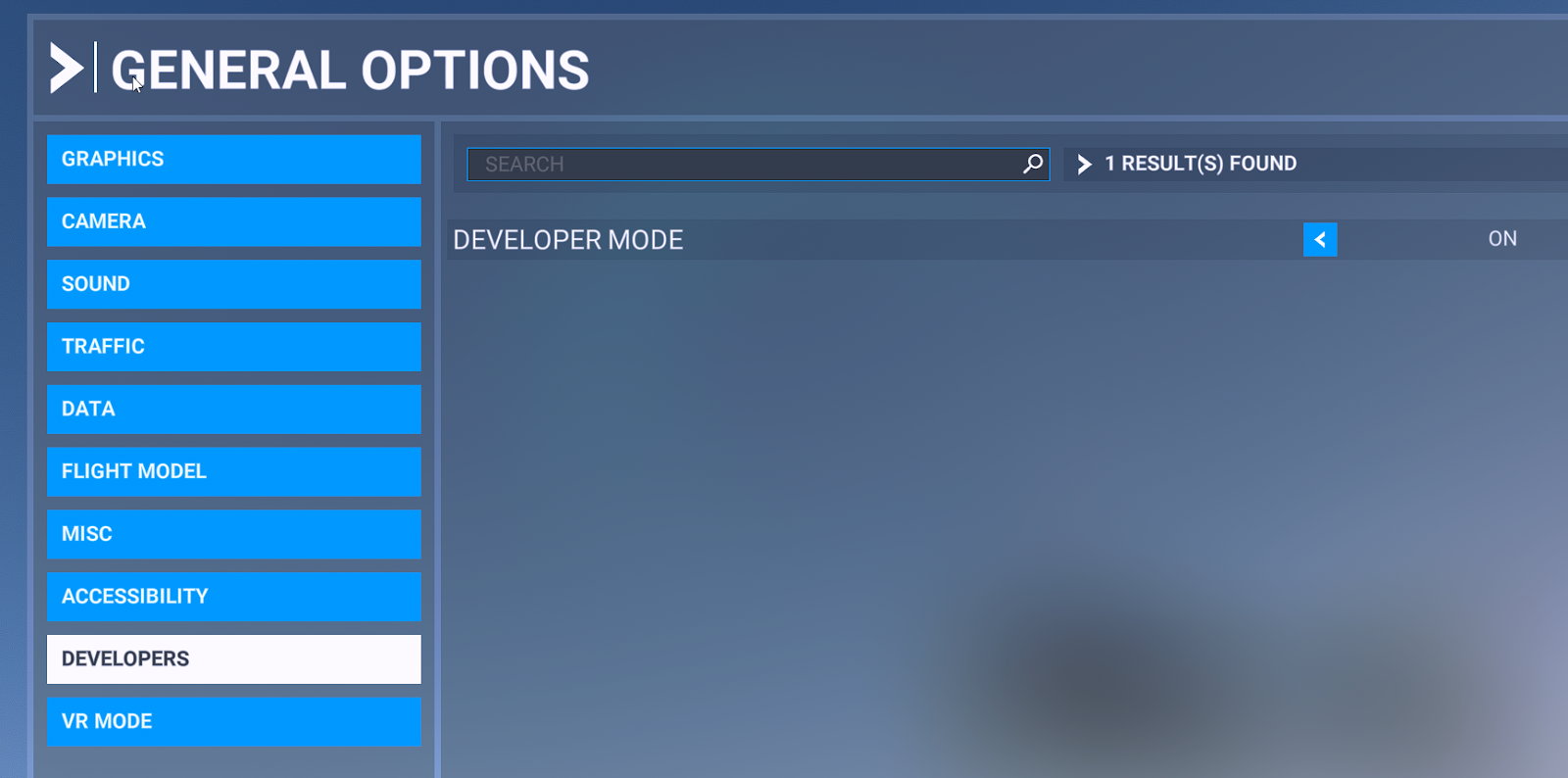
  2. Si ce n'est déjà fait, activez le mode développeur (General Options, Developper)


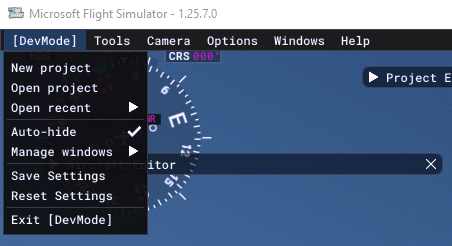
  3. Depuis le menu du haut de la fenêtre [DevMode], New Project. Donnez n'importe quel nom au projet dans le champ "Project name", puis cliquez sur "Create new project"


  4. Vous pouvez cliquer sur Cancel sur la fenêtre de l'assistant qui vous demandait "Default creator name" et "Default company name"


  5. Depuis le menu "Tools" du menu en haut de la fenêtre, sélectionnez "Aircraft Editor"


  6. Une nouvelle fenêtre "Aircraft Editor" est maintenant disponible


  7. ... c'est depuis l'option "Debug" qui faut cocher "CFD" pour voir apparaître une dernière nouvelle fenêtre "Debut Aircraft CFD", où vous pourrez cocher Air Flow Visualization" par exemple. 


    Il vous reste à manipuler l'avion en vue extérieur et voir les flux d'air se comporter plus ou moins différemment. Attention, tous les avions ne sont pas compatibles. Le Cessna 172 classique, protégé n'est pas accessible par exemple.


19.3.22

Le vent du nord et de travers pour l'atterrissage à St-Cyr en DR400

Hier, ça soufflait pas mal de travers à St-Cyr même si c’était plus impressionnant en lisant le METAR que dans la réalité. Heureusement qu’on était sur de l’herbe. Pour les simmers, on est encore loin de tous ces ballottements (regardez les ombres projetées sur la planche de bord) mais surtout notez les aiguilles du badin qui s’agitent dans tous les sens. Pour ceux qui ne connaissent pas St-Cyr, le seuil de la 11L (aux chevrons) est pas mal décalé pour passer l’autoroute.


14.1.22

KMYF San Diego Montgomery a maintenant sa propre tour de contrôle dans MSFS


En janvier 2021, c'était ma première scène "développée" avec le Scenery Editor gratuit et inclus dans MSFS, dès la première version. Une vraie avancée que l'on oublie facilement : pouvoir placer des objets en mode WYSIWIG (What You See Is What You Get) et en temps réel directement dans le décor du simulateur, le compiler puis le partager (merci flightsim.to) est une révolution.


A force de lecture de tutoriaux, d'essais et de persévérance, des non-développeurs comme moi, ont pu améliorer leurs terrains fétiches. En plus, la semaine dernière un membre de flightsim.to m'a proposé de créer les tours de contrôle pour 2 de mes scènes, Ramona (KRNM) et l'autre terrain de San Diego (Montgomery Field, KMYF), plus fréquenté que KSAN l'international. Je les ai reçu dans la foulée.


1 an après la première version, j'en ai aussi profiter pour rajouter des panneaux spécifiques de taxiways que je sais faire maintenant manuellement.


La communauté autour de MSFS n'a de cesse de m'émerveiller.

La scène gratuite de Montgomery Field - Gibbs Executive (KMYF) est à télécharger gratuitement depuis flightsim.to: https://flightsim.to/file/5856/montgomery-gibbs-exec-airport-taxiway-fix-and-many-more


4.1.22

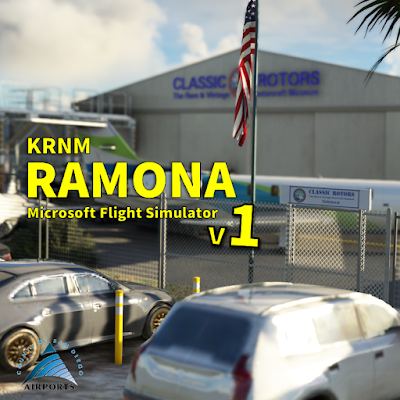
Ramona (KRNM) for MSFS


Ramona airport (ICAO:KRNM) is a public airport, 40 minutes from downtown San Diego and the beach in California. The airport is mostly used for general aviation, the California Department of Foresty and United States Forest Service (USFS) jointly operate a fire attack base. Download for free at : https://flightsim.to/d/vbazillio/ramona-krnm

Pacific Exec FBO

As all of my MSFS mod, this small scenery is made from pilot-eyes perspective. I flew there several time for pattern training and stops at Plus One Club house, and I'm an amateur scenery developer. This mod is made with 99% of MSFS default objects library. Download for free at : https://flightsim.to/d/vbazillio/ramona-krnm


CalFire entrance


Last reading before take-off


Features

All airport buildings have been replaced: hangars, FBO's, Air Attack Base, Classic Rotors museum, all external fence and gates, fuel island, executive hangar, airport beacon...

  • All new and very specific taxiway signs... except the blue ones on Air Attack Base. Let me know if you know what's written on them! I need your help.
  • Adjustement of all taxiway lines
  • FBO's Chuck Hall Aviation, CruiseAir Aviation and Pacific Exec Aviation rebuild
  • Replacement of 90% autogen buildings by MSFS Library. Very few are the AI autogenerated buildings by AI Shark / MSFS engine.
  • Hundreds of details to create life: objects from library but also handmade signs and banner on buildings. This scenery may impact your fps.
  • Replacement of Tower
  • Reveal of all helipads (including the north helipad not open to pub ;)
  • Reveal of Segmented Circle/Windsock south side close to CruiseAir
  • Reveal of Compass Rose
  • Redesign of Fire Attack Base apron with trace of fire retartand. This scenery can't wait for a Grumman S2 Tracker!
  • Replacement of windsock
  • Replacement of PAPI (2 lights, P2L)
Download for free at : https://flightsim.to/d/vbazillio/ramona-krnm

Ramona Avionics hangar

Chuck Hall Aviation FBO


CruiseAir Aviation FBO

Example of specific taxiway signs


Jointly operated Air Attack Base with spilled Phos-Chek (red soils of fire retardant)


One of the public entrance with Plus One Flyers banner

Classic Rotor museum public entrance


History and background of the airport 

In 1943 the U.S. Navy built a small, dusty airstrip at what is now the Ramona Airport. In 1956, the facility was conveyed to San Diego County and the airport has now grown to become the aviation center for community service to San Diego's inland and mountain communities. The Ramona Airport is the third busiest facility in the County’s system.

Aerial view of Air Attack Base

The Ramona Air Attack Base is located in the CAL FIRE San Diego Unit and was established in 1957 by the then California Division of Forestry, making it the oldest Air Attack Base in the Department’s system. In 1960, the US Forest Service set up and operated from Ramona, separate from CDF, until 1966 when the agencies integrated and Ramona became a jointly operated base. Ramona responds to an average of 450 calls per year. On average, the base pumps 850,000 gallons of retardant a year. Ramona has a possible peak output of 250,000 gallons of retardant each day. The base’s direct protection area encompasses over 1.4 million acres for CAL FIRE, 300,000 for the US Forest Service, and covers all of San Diego County.

View of Ramona tower control

Uncomplicated airspace, available services, ideal climate and proximity to North County business and recreation centers make Ramona Airport an ideal destination for work or pleasure. Serving every type of aircraft from home-built experimental to corporate jets, the Ramona Airport is home to a fully staffed air traffic control tower, three full-service Fixed Base Operators (FBOs) (Pacific Exec Aviation, Chuck Hall Aviation and CruiseAir Aviation) an avionics center, an aircraft service center, nine aviation businesses, a full-time airport manager and the world's only helicopter museum with operational helicopters (Classic Rotors).


20.12.21

Bonnes fêtes de fin d'année à tous les lecteurs du blog


Je souhaite de bonnes fêtes de fin d'année à tous les lecteurs du blog "Du Virtuel au Réel" ! A l'heure des réseaux sociaux, nous faisons figure de résistants sur ce blog :) Sous peu, il fêtera ses 18 ans comme un dinosaure. Je vous souhaite des tempêtes de ciel bleu et du vent arrière... réel ou virtuel!

Related Posts Plugin for WordPress, Blogger...